Stitch Braids
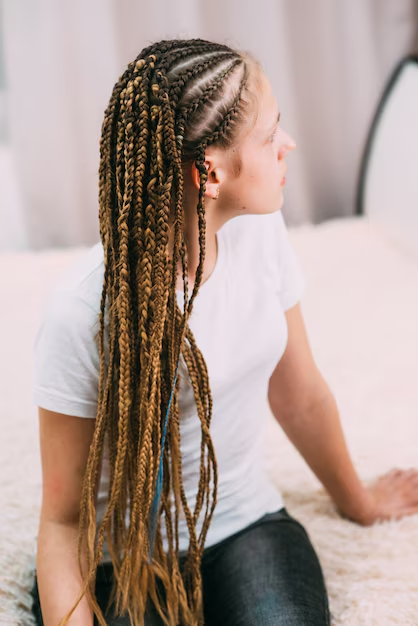
Stitch Braids in NYC
Looking for clean, defined stitch braids in New York City? Makoula African Hair Braiding creates polished braided styles with precise parting, smooth sections, and a neat finish designed around your hair, scalp, and preferred look.
From classic straight-back stitch braids to creative patterns and feed-in designs, we provide professional braiding services for clients throughout NYC, including Harlem and surrounding communities.
Call to discuss your style or book an appointment:
Neat, Precisely Parted Stitch Braids
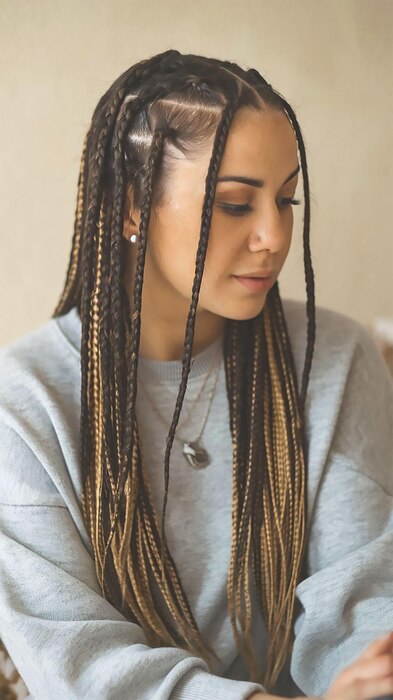
Stitch braids are a modern cornrow style recognized by their distinct horizontal parting lines. Small sections of hair are separated and gradually added into each braid, creating the signature “stitched” appearance.
The result is a structured, eye-catching protective style that can be customized with different braid sizes, lengths, patterns, and finishing details.
At Makoula African Hair Braiding, we focus on creating a balanced style that complements your facial features while maintaining a clean, consistent braid pattern.
How Long Do Stitch Braids Last?
Stitch braids commonly remain wearable for approximately two to six weeks. Longevity varies depending on the braid size, hair texture, scalp condition, activity level, installation quality, and home care.
Keeping braids installed for too long can lead to excessive buildup, matting, dryness, or tension around the hairline. Remove the style when the braids become overly loose, the scalp develops persistent discomfort, or the natural hair begins to tangle significantly at the roots.
How to Maintain Stitch Braids
Use a simple maintenance routine to help preserve the style and support scalp comfort.
- Cover your braids with a satin or silk scarf at night.
- Use a satin pillowcase as additional protection.
- Keep the scalp clean without aggressively rubbing the braids.
- Dry the scalp completely after washing or sweating.
- Apply lightweight moisture products as needed.
- Avoid repeatedly pulling the braids into tight hairstyles.
- Limit heavy gels, oils, and edge-control buildup.
- Protect the braids during workouts, swimming, and humid weather.
- Avoid scratching the scalp with fingernails or sharp objects.
Contact your braider or a qualified hair-care professional if you experience persistent pain, bumps, inflammation, or unusual hair loss.
Who Are Stitch Braids Best For?
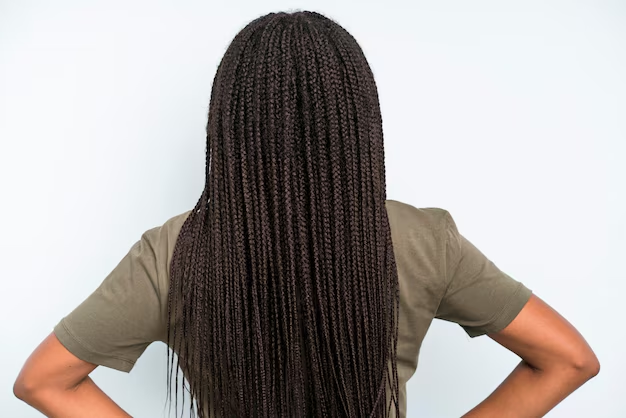
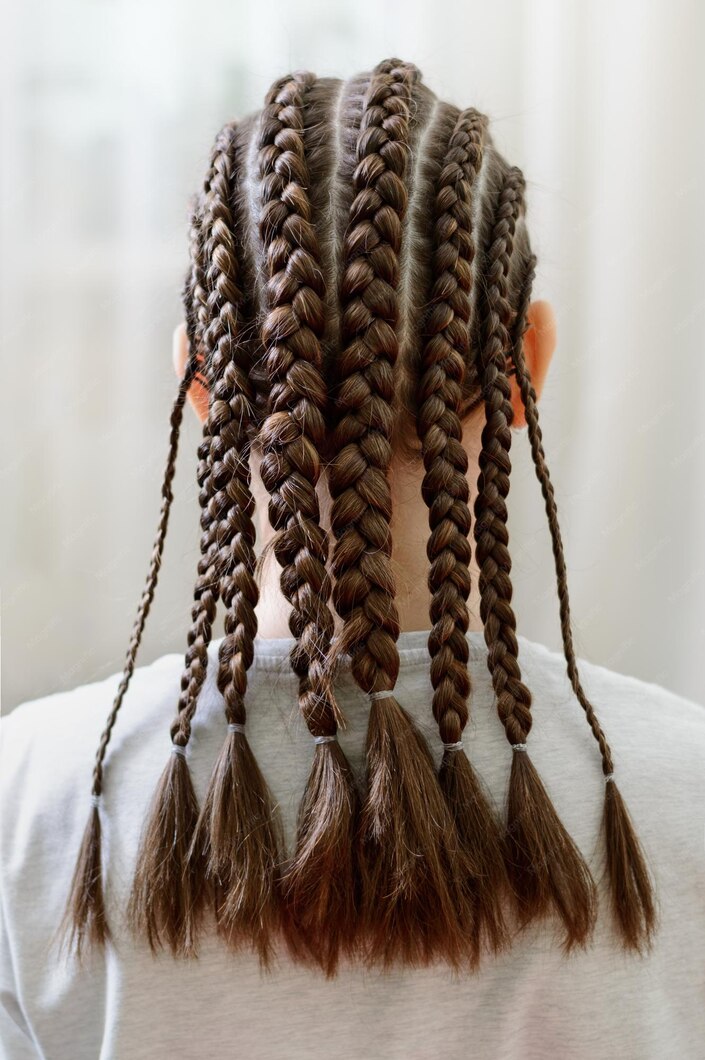
Stitch braids may suit clients who prefer a defined cornrow style with visible parting and a sleek appearance. They can be adapted for different hair densities, personal styles, braid lengths, and occasions.
A consultation may be especially helpful when you have:
- Short natural hair
- Fine or fragile edges
- A sensitive scalp
- Previous tension-related breakage
- A detailed pattern in mind
- Questions about extension hair
- Concerns about braid size or weight
Are Stitch Braids a Protective Hairstyle?
Stitch braids can function as a protective hairstyle because they keep the hair organized and reduce the need for daily manipulation. However, the protective benefit depends on appropriate installation, reasonable tension, proper maintenance, and timely removal.
Braids that are too tight may contribute to breakage or stress around the edges. Communicate immediately if the style feels excessively tight during your appointment.
Book Stitch Braids in New York City
Get a polished stitch-braid style created with careful parting, consistent braiding, and attention to your requested design.
Makoula African Hair Braiding serves clients across New York City, including Harlem, with professional natural hair braiding and protective styling services.
Call today to ask about availability:
Phone: (917) 519-2371
Alternate phone: (646) 294-7038
Stitch Braids for Natural Hair
Stitch braids can be installed on many natural hair textures. Hair should generally be clean, thoroughly detangled, and stretched enough to allow for smooth sectioning and controlled braiding.
If your hair is very short, fragile, thinning, or prone to breakage, let your braider know before the appointment. This allows the style and tension to be adjusted where possible.
Clients with sensitive scalps should also communicate their concerns before and during the braiding process. Protective styling should not require excessive discomfort.
Why Choose Stitch Braids?
Stitch braids are popular because they offer a polished appearance without requiring daily styling.
They may be a good option when you want:
- A neat protective hairstyle
- Defined and symmetrical parting
- A style suitable for work, events, travel, or everyday wear
- Less daily manipulation of your natural hair
- A customized braided design
- A style that can be worn in different lengths and patterns
Your final result will depend on your natural hair, requested design, braid size, added hair, scalp condition, and maintenance routine.
Feed-In Stitch Braids
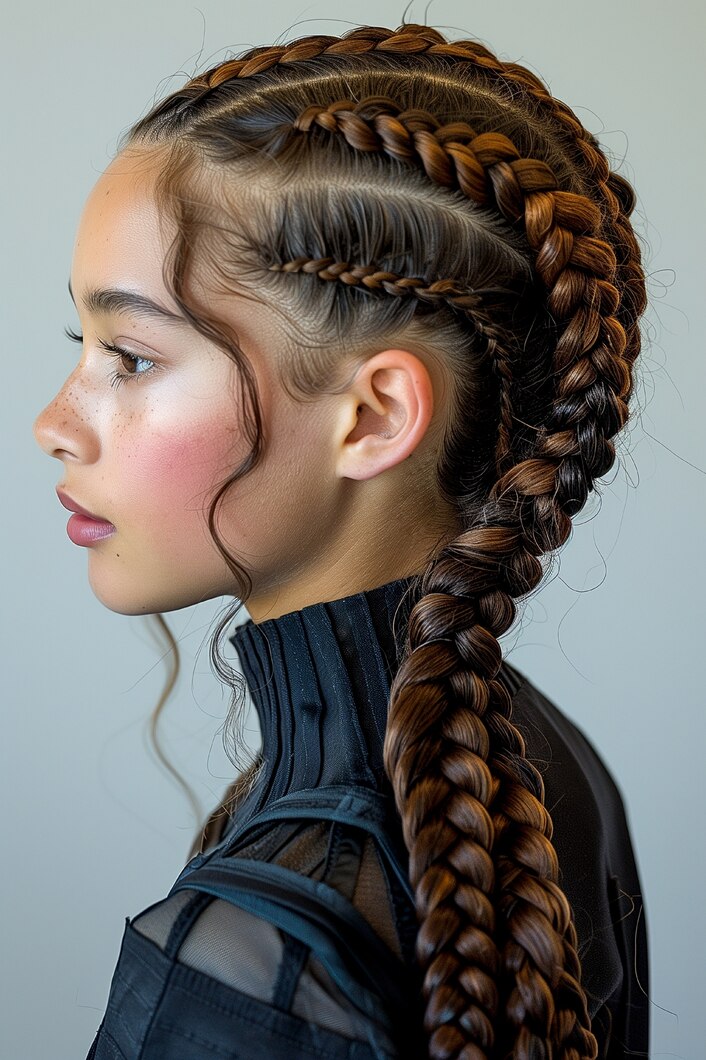
Feed-in stitch braids use small amounts of braiding hair that are gradually incorporated into the natural hair. This technique can create a smoother transition from the scalp while adding length, thickness, or both.
Feed-in hair can also help create:
- Longer stitch braids
- Fuller braided ponytails
- More defined braid patterns
- Gradual changes in braid thickness
- Customized colors and finishes
Ask about the type and amount of braiding hair needed for your chosen style when scheduling your appointment.
What to Expect During Your Appointment
The process generally begins with a discussion of your desired braid pattern, size, length, and finish. Your hair is then sectioned carefully to create the visible stitch pattern.
The braiding time varies based on several factors, including:
- Number of braids
- Complexity of the design
- Hair length and density
- Braid length
- Amount of added hair
- Requested finishing details
Simple straight-back styles typically require less time than detailed curved patterns, braided ponytails, or combination styles. Contact the salon with a reference image for guidance about your specific look.
How to Prepare for Stitch Braids
Proper preparation can help your appointment progress more smoothly.
Before arriving:
- Wash your hair and scalp thoroughly.
- Detangle your hair from the ends toward the roots.
- Remove heavy product buildup.
- Stretch or blow-dry your hair if requested.
- Avoid applying thick oils, grease, or styling creams.
- Bring a clear photo of your preferred style.
- Ask whether you need to bring braiding hair.
Do not braid over an irritated, inflamed, or injured scalp. Address active scalp concerns before installing a long-wear protective style.
Frequently Asked Questions
Both styles are braided close to the scalp. Stitch braids use repeated horizontal sections that create a distinct stitched pattern, while traditional cornrows may have smoother sections without the same visible detailing.
Yes. Stitch braids can be created using natural hair when there is enough length and density to support the requested design. Braiding hair may be added when greater length, fullness, or a particular finish is desired.
Possibly. Suitability depends on the length, condition, texture, and density of your hair. Contact the salon before booking and provide a recent photo for a more informed discussion.
You may feel some tension during installation, but the style should not cause intense or persistent pain. Tell your braider immediately when any section feels excessively tight.
The right number depends on the look you want. Four or six larger braids can create a bold, simple style, while a greater number of smaller braids may produce a more detailed appearance.
Yes, but wash gently. Focus on cleansing the scalp, avoid rough scrubbing, and make sure the braids and scalp dry completely afterward.
Yes. Stitch braids can be directed into a high, low, or mid-level ponytail. The design should be planned before the braiding process begins.
Yes. A reference photo helps communicate the braid pattern, number of braids, length, size, color, and finishing details you prefer.